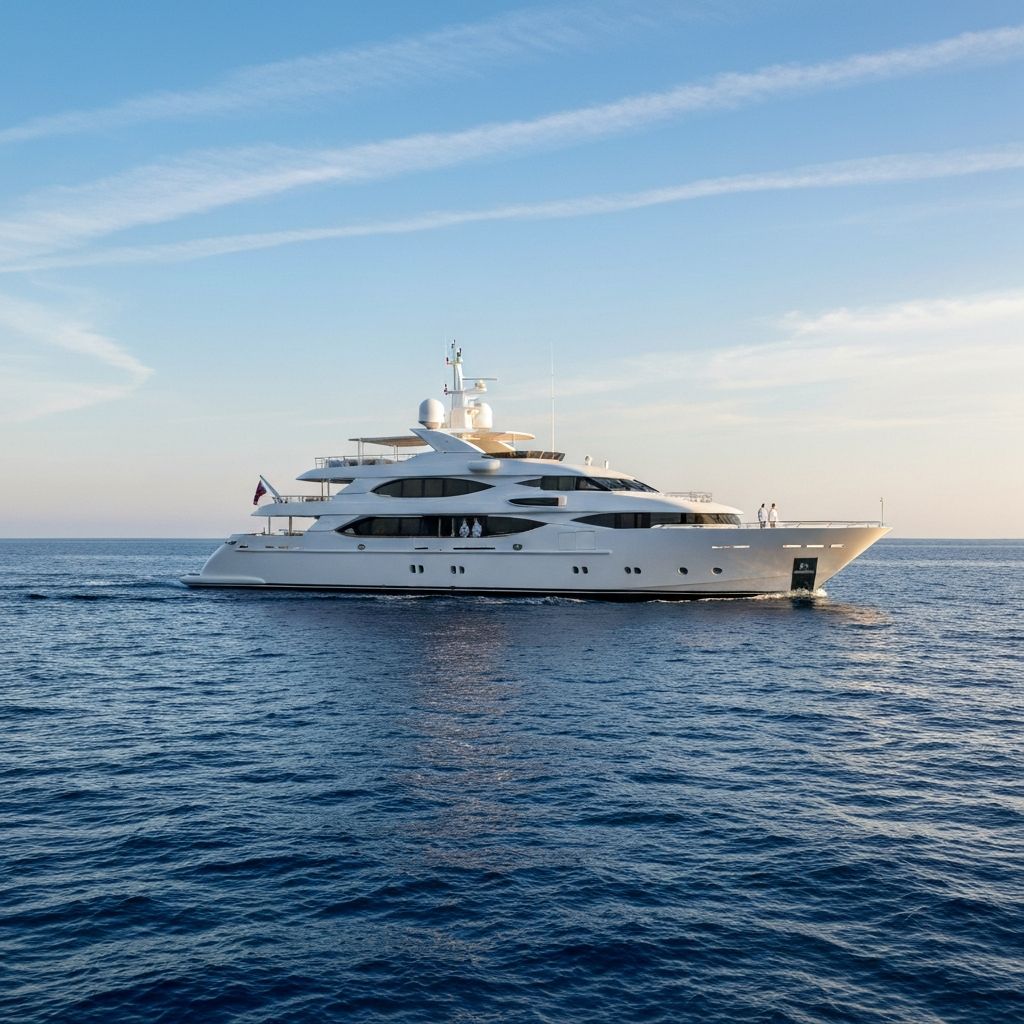
The superyacht industry has long been defined by its pursuit of excellence—sleek vessels, impeccable service, and unforgettable experiences for guests. Yet beneath the polished exterior, the professionals who make it all possible have often worked in conditions that fall short of the care they provide. That narrative is changing.
The Maritime Labour Convention (MLC) 2006, often called the "Seafarers' Bill of Rights," underwent transformative amendments that entered into force on 23 December 2024. For yacht owners, captains, crew, and management companies, these changes represent the most significant overhaul of crew welfare standards in modern maritime history—and they are now operational reality, not future planning.
For those implementing these requirements in 2026, understanding what changed and why is essential. These amendments address hard lessons learned during the COVID-19 pandemic and recognize that crew health—both physical and mental—is fundamental to safety, performance, and the industry's future.
The Wake-Up Call: Why These Amendments Matter Now
The COVID-19 pandemic exposed critical vulnerabilities in maritime crew welfare. Seafarers found themselves stranded on vessels for months beyond contracted periods, isolated from families with limited communication, unable to access medical care ashore, and facing unprecedented mental health challenges. The crew change crisis became a humanitarian emergency that disrupted global trade and highlighted the essential role seafarers play—yet how inadequately their fundamental needs were protected.
The yachting sector experienced parallel pressures. ISWAN's Welfare of Yacht Crew 2024 Annual Review revealed a troubling 21.4% year-on-year increase in contacts related to abuse, bullying, harassment, discrimination, and violence. Women, who comprised 50% of contacts where gender was known, accounted for 80% of abuse-related cases. Mental health challenges—worry, concern, stress—topped the reasons crew contacted the YachtCrewHelp helpline. These statistics reflect not isolated incidents but systemic issues demanding structural solutions.
Research consistently shows that seafarers face elevated mental health risks: 25% report depression, 17% experience anxiety, and 20% have suicidal ideation. Contributing factors include non-caring work cultures, violence, inadequate training, and excessive work hours that violate regulations in practice, even when compliant on paper. In an industry where crew live and work in confined quarters for extended periods, often thousands of miles from support networks, the dual role of the yacht as workplace and home can create a sense of entrapment for those experiencing harm.
The MLC amendments directly target these realities. They mandate connectivity, strengthen medical care access, enforce nutritional standards, require properly fitting safety equipment, and address violence and harassment through forthcoming 2025 amendments entering force in December 2027. These are not bureaucratic exercises; they are evidence-based responses to documented harm.
Social Connectivity: The Lifeline Mandate
Perhaps no amendment resonates more deeply with modern crew than the mandatory provision of internet access. Standard A3.1, as revised, now requires shipowners to provide "facilities for social connectivity," including internet access, with charges kept reasonable if imposed at all. Port states are encouraged to facilitate internet services for seafarers in ports and associated anchorages.
This requirement reflects a fundamental recognition: in the 21st century, connectivity is not a luxury—it is a basic human right essential to mental health and wellbeing. Mark Dickinson, vice chair of the International Transport Workers' Federation Seafarers' Section, captured this succinctly: "Being able to keep in touch with family and friends is not just a nice-to-have, it is a basic human right. That is why we fought so hard for seafarers to be given internet access and to have a mandatory provision in the MLC".
The practical implications for yacht operations are clear. Owners must ensure vessels are equipped with adequate bandwidth and connectivity infrastructure. For superyachts operating in remote cruising grounds, this may require upgrading satellite communication systems beyond basic GMDSS requirements. Crew should have access to connectivity that allows video calls, social media, email, and streaming content—tools that maintain psychological wellbeing by keeping crew connected to their lives ashore.
While shipowners initially resisted the change, arguing for the right to limit access and impose charges, the final language ensures that any fees remain exceptional and reasonable. The message is unambiguous: isolation exacerbates mental health challenges, and technology that alleviates it must be accessible.
Connectivity also enables access to remote mental health resources. Services like MedAire's emotional support add-on provide crew with up to five confidential counselling sessions per incident per year, accessible via phone or video. ISWAN's YachtCrewHelp offers a free, multilingual, 24/7 helpline for crew facing bullying, mental health challenges, unemployment, or contractual issues. These resources are only as effective as the connectivity that enables them.
Medical Care: From Reactive to Proactive
The 2024 amendments introduce rigorous new requirements around medical care, reflecting lessons from the pandemic when crew faced bureaucratic barriers to treatment ashore. Standard A4.1 now mandates that member states ensure prompt disembarkation of seafarers in need of immediate medical care and provide access to medical facilities ashore for appropriate treatment.
Critically, Guideline B4.1.3 defines specific circumstances constituting "immediate medical care":
- Serious injury or disease that may lead to temporary or permanent disability
- Communicable diseases posing transmission risk to other crew
- Broken bones, severe bleeding, broken or inflamed teeth, severe burns
- Severe pain unmanageable onboard, considering operational patterns and available analgesics
- Suicide risk
- Telemedical advisory service recommending treatment ashore
The explicit inclusion of suicide risk represents a watershed moment. It acknowledges mental health emergencies as medical emergencies deserving the same urgency as physical trauma. For captains and medical officers, this creates a clear duty to act when crew present with suicidal ideation—not as a discretionary response, but as a regulatory requirement.
Telemedicine, already widely adopted via services like MedAire (serving over 50% of the world's largest superyachts), becomes even more critical under the new framework. The MLC has long required member states to ensure 24/7 medical advice via radio or satellite communication, free of charge. Now, when telemedical doctors recommend shoreside treatment, vessels must facilitate disembarkation. This closes a gap where medical advice could previously be ignored for operational convenience.
The amendments also address death at sea, requiring member states to facilitate repatriation of deceased seafarers' bodies or ashes per the wishes of the seafarer or next of kin. All seafarer fatalities must be recorded, adequately investigated, and reported annually to the ILO with relevant data published. This transparency creates accountability and enables evidence-based policy refinement.
For yacht operators, compliance means ensuring robust telemedical service agreements, clear protocols for medical disembarkation, and training for crew responsible for medical care. It also means recognizing that delaying treatment for operational reasons is no longer permissible when immediate care criteria are met.
Nutrition and Hydration: Fueling Performance
Food quality has been a persistent issue in maritime operations, often treated as secondary to other operational priorities. The 2024 amendments elevate nutrition to a compliance requirement. Standard A3.2 now explicitly mandates that food and drinking water be provided free of charge, with meals that are nutritious, balanced, and of sufficient quantity and quality.
This seemingly straightforward provision addresses a gap in earlier language. While food was generally supplied without charge, water provisions were not explicitly regulated, and meal quality standards were vague. The amendments require that food be inspected for quantity, quality, nutritional value, and variety, prepared in hygienic conditions with regard to religious and cultural practices of seafarers onboard.
The physiological and psychological impacts of nutrition are well-documented. A well-balanced diet supports physical health, cognitive function, energy levels, and mood stability—all critical for crew performing complex, safety-sensitive tasks. Conversely, diets high in processed foods, sugar, and sodium—common when galley teams lack training or provisioning prioritizes convenience—contribute to fatigue, irritability, poor sleep, and long-term health risks.
Yacht owners and managers must work with galley teams to assess current provisioning practices. This may involve engaging professional catering consultants, reviewing meal plans for nutritional balance, sourcing higher-quality ingredients, and ensuring adequate fresh produce during extended passages. For yachts without professional chefs, training for crew responsible for food preparation becomes essential.
Free, high-quality drinking water is now mandatory. Yachts must install or verify the functionality of onboard water filtration systems or plan for additional water supplies during provisioning runs. Dehydration impairs cognitive function and physical performance; ensuring crew have unlimited access to potable water is foundational to health and safety.
These provisions also intersect with crew morale. As noted in American P&I Club guidance, "A well-trained cook preparing good tasting and healthy food onboard a vessel is always appreciated and an important component to crew morale and physical well-being". Investing in galley quality is investing in crew retention and performance.
Personal Protective Equipment: Safety That Fits
The amendment to Standard A4.3 requiring appropriately sized personal protective equipment for all seafarers, explicitly considering the increasing number of women seafarers, addresses a long-overlooked safety gap. Historically, maritime PPE has been designed for male bodies, leaving women and smaller-framed individuals with equipment that is too large, cumbersome, and dangerously ineffective.
Research by Solent University in 2020 found that over 80% of female participants reported experiencing problems with PPE relating to their gender. The consequences are severe: improperly sized gloves reduce dexterity; loose safety harnesses fail to prevent falls; oversized respirators and safety glasses leave gaps that allow exposure to hazards; hard hats slip over eyes, obscuring vision; and ill-fitting boots increase slip and trip risks. The Seafarers' Charity's 2025 report on port-based welfare needs of women seafarers confirmed that ill-fitting PPE remains a persistent issue, with women sometimes purchasing and transporting their own PPE to ensure proper fit.
The amendment, effective 23 December 2024, obligates yacht owners to review current PPE inventories and procurement practices. All protective clothing, helmets, gloves, harnesses, boots, and other safety equipment must be available in sizes suitable for all crew members. Training should ensure crew understand how to select and use PPE correctly.
Progressive companies have already responded. In March 2023, Synergy Group provided tailor-made PPE to female seafarers across more than 60 vessels, designed by textile engineers in consultation with female seafarers and maritime safety experts. Such initiatives demonstrate that properly fitting PPE is achievable; the amendment simply makes it mandatory.
For an industry increasingly focused on diversity and inclusion, this requirement aligns legal compliance with ethical responsibility. If the goal is to attract and retain female crew—who now represent up to 50% of yacht crew contacts in some datasets—providing equipment that keeps them safe is non-negotiable.
Work and Rest Hours: The Foundation of Safety
The MLC has long regulated seafarer work and rest hours, recognizing that fatigue is a leading cause of accidents, injuries, and impaired decision-making. The requirements remain consistent across STCW and MLC frameworks:
- Minimum 10 hours rest in any 24-hour period
- Minimum 77 hours rest in any 7-day period
- Maximum 14 hours work in any 24-hour period
- Maximum 72 hours work in any 7-day period
- Rest may be divided into no more than two periods, one of which must be at least six hours, with intervals between rest periods not exceeding 14 hours
Despite clear regulations, compliance in practice is challenging, particularly in the superyacht environment where guest demands, port schedules, and seasonal intensity create pressure to exceed limits. Seafarers report that work and rest hour records are often "on paper, not reflecting the reality on board," with some working "20+ hours per day" in violation of MLC provisions.
Fatigue impairs cognitive function, reaction time, judgment, and mood, creating safety hazards and contributing to mental health decline. The maritime industry recognizes peak drowsiness periods between 3:00-6:00 AM and 3:00-5:00 PM, when crew are most vulnerable to error. Effective fatigue management requires not just compliance with minimum rest requirements but strategic operational planning: avoiding critical tasks during high-risk periods, rotating activities to break monotony, scheduling hazardous work for daytime hours, and creating an open communication environment where crew feel safe reporting fatigue without fear of retaliation.
For captains and yacht managers, robust digital systems for tracking work and rest hours—now certified by classification societies like Lloyd's Register—can streamline compliance and provide real-time visibility into crew fatigue risk. Strategic napping, even 10-15 minutes, delivers measurable performance benefits and helps mitigate fatigue accumulation. Ensuring crew have adequate rest before joining a vessel, rather than going immediately on watch after long travel, is another evidence-based practice.
The link between rest hour compliance and broader crew welfare is direct: well-rested crew are safer, healthier, more engaged, and less prone to the irritability and conflict that contribute to toxic work environments.
What's Coming in 2027
While the 2024 amendments are now in force, the 2025 amendments adopted at the International Labour Conference in June 2025 represent the next evolution, set to enter force in December 2027. These amendments address issues that became acute during the pandemic and reflect sustained advocacy by seafarer unions and welfare organizations.
Key Worker Designation
The formal designation of seafarers as key workers is perhaps the most symbolically and practically significant change. During COVID-19, crew faced travel restrictions, visa denials, and inability to change crews despite expired contracts, while simultaneously being expected to maintain global supply chains. The key worker designation obligates member states to take appropriate measures facilitating safe movement of seafarers for crew changes, repatriation, shore leave, and medical care ashore.
This is not merely symbolic. It creates legal obligations for governments to prioritize seafarer movement, particularly during emergencies, and provides a framework for advocacy when crew face bureaucratic barriers.
Enhanced Shore Leave Rights
Shore leave is critical for mental health and wellbeing, offering crew a break from the intensity of onboard life and connection to shoreside communities and services. The 2025 amendments strengthen shore leave rights dramatically:
- Seafarers are entitled to shore leave when off duty upon arrival in port
- Shore leave shall be granted without discrimination on any grounds and irrespective of flag state
- Seafarers shall not be required to hold a visa or special permit for shore leave
- Public authorities cannot refuse shore leave for reasons of public health, public safety, or public order without written justification provided to the seafarer or master upon request
These provisions eliminate bureaucratic barriers that have historically prevented crew from accessing shore leave, particularly in jurisdictions with restrictive visa policies. For yacht crew, often operating in diverse itineraries across multiple jurisdictions, this creates a consistent framework for exercising a fundamental right.
Violence and Harassment Prevention
Building on earlier amendments that brought harassment and bullying under MLC Regulation 4.3 (health and safety protection) in 2019, the 2025 amendments introduce robust measures to prevent and address violence and harassment onboard, including sexual harassment and bullying. Member states must now implement laws and onboard procedures to protect seafarers and ensure safe reporting mechanisms.
This is urgently needed. ISWAN's 2024 data showing a 21.4% increase in abuse-related contacts and that 80% of such cases involved women underscores the scale of the problem. Harassment and bullying compromise physical and emotional health, decrease motivation, increase sickness, and undermine teamwork. The close quarters and hierarchical structures of yacht operations can intensify these dynamics, particularly when senior figures are perpetrators or enablers.
The MLC now requires:
- Clear policies defining harassment and bullying
- Reporting, complaints, and grievance procedures that protect confidentiality and prevent victimization
- Awareness-raising and training for all crew
- Investigation procedures treating complainants and alleged perpetrators with equal dignity and fairness
- Actions demonstrating that complaints will be addressed seriously and expeditiously
For yacht owners and captains, this means not only having policies in writing but embedding anti-harassment culture through leadership example, training, and visible accountability when violations occur.
Recreational Facilities and Exercise: Investment in Wellbeing
While recreational facilities have been part of MLC guidance since inception, the Convention's focus on "promoting seafarers' health and well-being" gains new urgency in light of mental health data. MLC guidelines recommend providing appropriate recreational facilities adapted to the special needs of seafarers who live and work onboard, with space on open deck permanently reserved for crew recreation.
Guideline B3.1.11 suggests consideration should be given to including exercise equipment—not as a mandatory requirement but as a best practice. Industry adoption has grown significantly. According to Gym Marine, most yachts over 50 meters now have some form of exercise capability, ranging from equipment stored in the bosun's locker on smaller vessels to large, dedicated crew gyms on yachts over 100 meters.
The rationale is compelling. Exercise is one of the most effective interventions for mental health, reducing stress, improving mood, enhancing sleep quality, and building resilience. Cheryl McCann of Nautilus International notes, "It is very important for yachts to provide a gym or space for crew exercise, as exercise is one of the most important things crew can do for their welfare".
Beyond physical equipment, recreational facilities should include spaces for social interaction, games, reading, hobbies, and film viewing—activities that break the monotony of long passages and foster crew bonding. The link between recreation and performance is well-established: crew with outlets for stress relief, social connection, and personal interests are more engaged, collegial, and productive.
For owners considering new builds or refits, allocating dedicated crew gym space and well-designed recreational areas is not an indulgence—it is a strategic investment in crew retention, morale, and operational excellence.
Mental Health Support: From Stigma to System
The MLC amendments create an ecosystem where mental health support is no longer peripheral but integral to operations. Connectivity enables access to remote counselling; medical care provisions include suicide risk as an emergency; nutritional standards support neurological health; adequate rest prevents fatigue-related mental decline; and harassment prevention reduces psychosocial risk.
Yet systemic provisions must be complemented by cultural change. Mental health stigma remains pervasive in maritime sectors. Crew fear retaliation, job loss, or being labeled "weak" if they disclose struggles. Breaking this stigma requires leadership.
Captains should undergo mental health first aid training to recognize signs of distress and respond appropriately. Many organizations now recommend "mental health champions" onboard every vessel—crew trained to provide peer support and connect colleagues to resources. This decentralizes mental health support, reducing the burden on any single individual and normalizing conversations about wellbeing.
Free confidential resources must be widely communicated. YachtCrewHelp, run by ISWAN, provides 24/7 multilingual support for crew and their families, handling over 940 cases since its November 2020 launch on issues including bullying, mental health, and unemployment. The service offers both emotional support and practical guidance on contractual issues, signposting to specialized services when needed.
For yachts with employer-provided mental health support through services like MedAire's emotional support add-on, ensuring crew know how to access these services and that usage is confidential and consequence-free is critical. Regular crew meetings that include mental health check-ins, posters displaying helpline information in cabins and common areas, and leadership openly discussing wellbeing all contribute to a culture where seeking help is normalized rather than stigmatized.
Compliance and Certification: The Operational Framework
For commercial yachts—those engaged in charter, carrying more than 12 passengers, or otherwise operating commercially—MLC compliance is mandatory if flagged under a country that has ratified the Convention, which includes over 100 nations representing more than 90% of the world fleet. Private yachts not engaged in trade are generally exempt, though some owners voluntarily adopt MLC standards to enhance crew welfare and meet insurer or management expectations.
Yachts of 500 gross tons and above operating internationally or in foreign ports require a Maritime Labour Certificate, which is issued following a successful inspection demonstrating compliance. Central to certification is the Declaration of Maritime Labour Compliance (DMLC), comprising:
- DMLC Part I: Issued by the flag state, specifying national requirements
- DMLC Part II: Prepared by the shipowner, demonstrating how the vessel meets those requirements
Following the 2024 amendments, flag states have updated DMLC Part I to incorporate new provisions on internet access, food and water standards, PPE, and medical care. Shipowners must correspondingly update DMLC Part II, providing evidence of compliance through policies, procedures, equipment inventories, service agreements, and crew training records.
Failure to comply can result in port state control detention, fines, loss of commercial status, and reputational damage in charter and crew recruitment markets. Conversely, demonstrable MLC compliance enhances reputation, supports crew retention, and reduces legal risk in disputes or accidents.
For yacht management companies and captains, maintaining compliance requires ongoing attention: regular internal audits, crew training updates, documentation maintenance, and proactive communication with flag administrations and recognized organizations. Digital compliance platforms that integrate work-rest hour tracking, training records, medical documentation, and audit trails can streamline this process and reduce administrative burden.
Beyond Compliance: Building a Culture of Wellbeing
Regulatory compliance establishes a floor, not a ceiling. The most successful yachting operations recognize that crew wellbeing is not a checklist to complete but a culture to cultivate. This requires leadership commitment, resource allocation, and sustained attention.
Best practices emerging across the industry include:
- Holistic wellness programs offering access to healthcare services, counselling, fitness programming, and nutrition consultation
- Effective rotation management that balances operational needs with crew rest, leave, and shore-based activities
- Open communication channels where crew can raise concerns without fear of retaliation, including anonymous reporting mechanisms for harassment or safety issues
- Regular wellbeing check-ins by captains and senior officers, demonstrating that crew mental and physical health is a leadership priority
- Professional development opportunities that support career growth, skill-building, and job satisfaction
- Recognition programs acknowledging crew contributions and celebrating achievements, fostering morale and engagement
- Proactive fatigue management that goes beyond minimum rest hour compliance to optimize scheduling, task rotation, and recovery periods
- Investment in physical environment: well-designed crew cabins with proper lighting, ventilation, and soundproofing; quality galley equipment and provisioning; and dedicated recreational spaces
These practices align with evidence from organizational psychology: employees who feel valued, supported, and cared for exhibit higher engagement, lower turnover, better performance, and stronger organizational commitment. In yacht operations where teamwork, discretion, and service excellence are paramount, the return on investment in crew wellbeing is measurable and significant.
Industry Initiatives and Collaboration
The yachting industry is increasingly organizing to address crew welfare collectively. The Changing Tack on Yacht Crew Welfare Working Group (CTWG), chaired by ISWAN and including Nautilus International, CHIRP Maritime, The Seafarers' Charity, and the UK Sailing Academy, is driving crew-centered change across the sector. The group is expanding participation and developing initiatives informed by helpline data and crew feedback.
Georgia Allen, ISWAN's projects and relationships manager, emphasizes, "Lasting impact requires collective effort. We urge those committed to a safer, fairer and more inclusive industry to join forces with us and help turn shared values into meaningful action". This collaborative model—bringing together unions, charities, training institutions, and industry stakeholders—recognizes that systemic challenges require systemic responses.
Blue Star Standard International partners with captains, owners, and crew to provide professional development coaching and training in leadership, communication, human resources, crisis management, and crew mental welfare coaching, including training on MLC guidance for eliminating harassment and bullying. Such specialized services help operationalize regulatory requirements and embed them in daily practice.
The MLC itself is designed as a "living instrument," with periodic reviews by tripartite committees of governments, shipowners, and seafarer representatives ensuring it remains responsive to evolving challenges. This iterative process, informed by data from welfare organizations, incident reporting, and academic research, enables evidence-based refinement of standards.
The Bottom Line
The superyacht industry has always been about creating exceptional experiences. It is time to ensure that commitment extends to the professionals who make those experiences possible. The amended MLC provides the framework and establishes mandatory baselines—internet connectivity, medical care, nutrition, properly fitting safety equipment, and (coming in 2027) formal key worker status and strengthened harassment protections.
What happens next depends on whether individual operators embrace these requirements as compliance necessities or recognize them as an opportunity to build something better: workplaces where crew are genuinely valued, supported, and cared for. The evidence is clear—crew who are well-fed, well-rested, connected to their families, and free from harassment are safer, more engaged, and more loyal. In an industry facing crew recruitment and retention challenges, that's not just ethical—it's smart business.
Resources for Crew and Operators
- YachtCrewHelp: Free, confidential, multilingual helpline, 24/7. Visit the ISWAN website for contact details.
- MedAire: Telemedical and emotional support services for superyachts.
- International Labour Organization (ILO): Full text of MLC 2006 and amendments available at ilo.org.
- ISWAN (International Seafarers' Welfare and Assistance Network): Resources, training, and support for seafarer welfare.
- UK Chamber of Shipping: Guidelines on mental health awareness for shipping companies.